Want to be in the loop?
subscribe to
our notification
Business News
PROPERTY CREDIT: BETTER WELL-CONTROLLED THAN TIGHTENED
This trend has been a continuous increase (43.1 per cent in 2013 and 45.4 per cent in 2014), thus giving rise to growing risks of credit and loan imbalances.
Gradual squeeze
It is noted that authorities are drafting a regulation under which the use of short-term deposits for medium and long-term loans will be decreased from current 60 per cent to 40 per cent. Meanwhile, the risk index of receivable lending for real estate will be raised from 150 per cent to 250 per cent.
Property businesses particularly pay attention to any information concerning the draft circular from the State Bank of Vietnam (SBV) as it decisively affects their operations. Bank credit is now the lifeblood of the property market. When policies on real estate investment fund development are ineffective, every movement from banks towards property credits will be indicative to the entire market.
The Vietnam Real Estate Association (VNREA) sent an official letter to the SBV, saying, “If Circular 36/2014 is amended as proposed, it will adversely affect not only the real estate market but also relevant sectors. It will also disrupt economic development as a whole.”
According to VNREA, Vietnam used to experience some lessons from property credit policy adjustments, which negatively changed the real estate market and the entire economy. This regulation will make people, businesses and investors lose confidence in the stability of macroeconomic policies. The move will lead to a potential increase of real estate inventories, break off ongoing projects, send property firms into dilemma and reduce the opportunity of house ownership of many people.
Credit squeeze may result in a fever due to short supply
Circular 36, which advocates tightening credit flows from banks into the real estate market, may lead to an immediate supply and demand imbalance.
Short supply will bring about a surge in housing prices. An abundant supply source and a healthy, balanced developing market is what both authorities and market players want to see.
Dr Le Xuan Nghia said that, given the expected positive impact of Trans-Pacific Partnership (TPP), the real estate market will reach a balance point of supply and demand by 2018, while the supply currently exceeds the demand. But, from 2019 onwards, the supply will fall short of demand as 2.5 - 3 million people will move from rural areas to cities and thousands of foreign engineers and workers will arrive in Vietnam to work.
For time being, there are not many ongoing projects while new projects will not come in a great number since the land fund has shrunk and the financial capacity of investors is limited. As a result, the property supply will decline from 2019 while the demand goes up.
“With the current demand and supply, the property market is forecast to enter a hot growth phase in 2023. But, recent analyses and forecasts signal a sooner fever, possibly in 2021,” he said.
Sharing the same point of view with Mr Nghia, many specialists anticipated a strong fever from 2021 due to short supply as a result of the credit squeeze policy.
In the 2005 - 2007 period, the real estate market recovered and grew strongly as Vietnam prepared to join the World Trade Organisation (WTO). The market witnessed an unprecedented fury as housing prices surged to all-time peaks and the bubble then burst.
Similarly, in the 2015 - 2017 period, the real estate market would revive as Vietnam has signed a lot of free trade agreements (FTAs) and the Trans-Pacific Partnership (TPP) Agreement. Foreign investor optimism is somewhat contained as foreigners seem to understand more about the Vietnamese market.
Nevertheless, capital from domestic people and big overseas remittances may spark new crazes if the supply fall short.
Partial squeeze
Before concerns of the market and businesses over medium and long-term impacts of credit tightening policy, the SBV assured that only speculators and weak property investors will be hurt when the amended Circular 36 takes effect. The central bank affirmed the policy change will not lead to a reduction in credit flows for the real estate.
If the amended Circular 36 advocates reducing the maximum ratio of short-term funds used for medium and long-term loans from 60 per cent to 40 per cent, banks still can provide medium and long-term credits for other borrowers, including property actors. Assuming all other factors held constant, the fund for the property market must reach VND540 trillion to hit the ceiling limit of 40 per cent specified in the amended Circular 36.
The effect of raising the risk index of receivable lending for real estate from 150 per cent to 250 per cent on the capital adequacy ratio (CAR) of banks is negligible, according to the SBV. The average CAR of the whole system has fallen from 13 per cent to 12.1 per cent. “With the CAR of 13 per cent as of the end of 2015 cents, banks may add approximately VND650 trillion to the economy to reach the limit of 9 per cent,” said the central bank.
Viewing from another perspective, Mr Tran Nhu Trung, Deputy General Director of Thu Do Investment and Trade Joint Stock Company, said that the housing demand has increased sharply, particularly in low-end and mid-end segments. Meanwhile, up to 70 per cent of the supply is for the high-end segment. This disparity may pose risks to the market. Regulating the capital flow for the market to avoid risks is necessary but there is a need for clear funding policy. Low-end housing segment needs to be encouraged to meet the market demand and developers need to have a good access to fund sources for development investment.
Source: VCCI
Related News
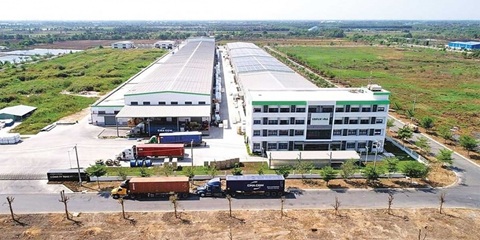
VIETNAM ECONOMY INVESTMENT
FOREIGN INVESTORS SEEKING A SYNCHRONISED MANUFACTURING ECOSYSTEM
Instead of focusing only on land costs and incentives as usual, foreign investors are seeking a synchronised manufacturing ecosystem, from stable power supply and logistics to shared infrastructure and the convenience of completing residence procedures for experts to serve their long-term investment in the country.
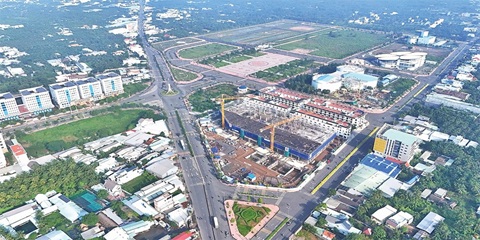
INFRASTRUCTURE / CONSTRUCTION / LOGISTIC / PORT
DONG THAP PROVINCE STEPS UP INDUSTRIAL EXPANSION AND INFRASTRUCTURE CONNECTIVITY
Accelerating public investment, strengthening inter-regional connectivity, and expanding industrial land are helping Dong Thap efficiently bolster competitiveness and drive economic growth. Following the 2025 merger of the former Dong Thap and Tien Giang provinces, the expanded Dong Thap province in the Mekong Delta faces mounting pressure to accelerate infrastructure development and strengthen connectivity among local economic zones, urban areas, industrial parks (IPs), and production centres.
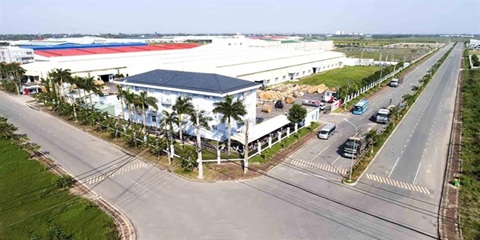
PROPERTY / INDUSTRIAL ZONE
HCM CITY ATTRACTS US$5.7 BILLION INTO EXPORT PROCESSING AND INDUSTRIAL ZONES
HCM City attracted US$5.7 billion in domestic and foreign investment into its export processing and industrial zones during the first nine months of 2026. The figure exceeded the city's full-year target by 31 per cent, highlighting strong momentum in high-quality industrial investment under Resolution No.10-NQ/TW. Total investment reached 131 per cent of the 2026 target of $4.25 billion and represented a 29 per cent increase compared with the same period in 2025, according to the city's Export Processing and Industrial Zones Authority (HEPZA).
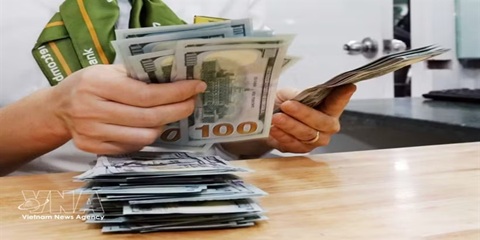
BANKING / FINANCE / INSURANCE / TAX
REMITTANCES TO HCM CITY RISE NEARLY 40% IN Q3
Remittances to HCM City reached more than US$2.83 billion in the third quarter of this year, up 39.5 per cent from the previous quarter and 3.6 per cent year-on-year. This was the first quarter showing positive annual growth this year, helping narrow the decline in remittance inflows over the first nine months. According to the State Bank of Vietnam (SBV)’s Regional Branch 2, remittances transferred to HCM City through credit institutions and economic organisations totalled $2.835 billion in Q3, an increase of more than $802 million from the previous quarter.

VIETNAM ECONOMY INVESTMENT
LOCALITIES REPORT BREAKTHROUGH RESULTS IN FDI IN FIRST NINE MONTHS
In Ho Chi Minh City, total registered capital reached $17.2 billion in the first nine months, up 4.2 times from the same period last year. The figure included more than $9.35 billion in newly registered capital and over $4.9 billion in additional capital for existing projects. Foreign investors also registered more than $2.9 billion through capital contributions and share purchases.

TECHNOLOGY
TECH SECTOR GROWTH OPENS UP OPPORTUNITIES FOR VIỆT NAM TO GO GLOBAL
The growth of the electronics, semiconductor and high-tech sectors worldwide is opening up a variety of opportunities for Vietnamese enterprises to integrate more deeply into the global supply chain. However, to become suppliers for these corporations, domestic enterprises must meet rigorous standards regarding quality, technology, productivity and order fulfilment capabilities.
Events Sponsors






















